How to Tie a Bow Tie
A self-tied bow tie looks far better than a pre-tied one, and it's easier than it looks. Here's how to tie a bow tie, step by step, for black tie and beyond.
A self-tied bow tie intimidates people far more than it should. The secret is that it’s tied exactly like your shoelaces: the same bow, just at your collar instead of your feet. It looks fiddly the first time and obvious by the third, and the slightly hand-made result looks far better than any pre-tied version.
Tie it loosely around your collar first to get the feel, then learn it properly in front of a mirror.
Work through the illustrated steps below slowly. If you get lost, remember the underlying shape: it’s the same loop-and-tuck as a shoelace bow, held sideways at your neck.
Getting it right
- Start a touch uneven. One end should hang slightly lower than the other so you have the right lengths to work with at the end.
- Tighten slowly. Seat the knot a little at a time, alternating between the folded loops and the flat ends. Yanking one side is what makes it lopsided.
- Let it be imperfect. A self-tied bow is supposed to look hand-tied. Small asymmetry is the charm; a flawless, flat bow looks pre-tied.
- Check it in the mirror. Adjust both wings until they’re roughly even and the knot sits snug at the collar.
A bow tie almost always wants a pocket square to finish the look. For when a standard necktie is the better call, see the overview of tie knots.
- 1
Set the starting length
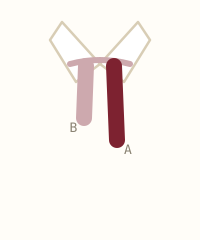
Drape the bow tie around your collar with one end hanging about an inch and a half lower than the other. Call the longer end A and the shorter end B.
- 2
Cross and loop
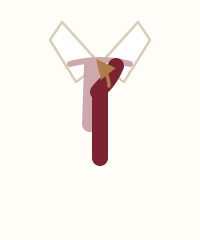
Cross the longer end A over the shorter end B, then bring A up through the loop around your neck from underneath and let it hang down the front.
- 3
Form the front bow
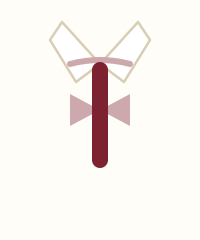
Fold the shorter end B toward your shoulder and back, forming a flat bow shape, and hold it horizontally at the centre of your collar.
- 4
Drape the long end over
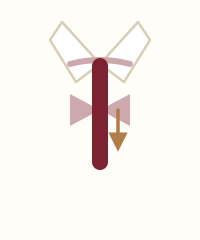
Bring the hanging end A straight down over the middle of the folded bow B.
- 5
Fold and push through
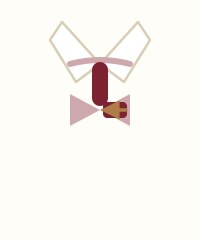
Fold end A back on itself and push the resulting loop through the gap behind the bow (behind end B).
- 6
Pull both sides
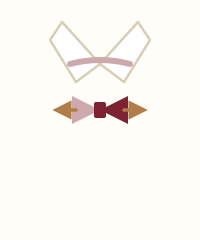
Gently pull on the folded loops on each side to seat the knot, working it tighter a little at a time.
- 7
Even it out
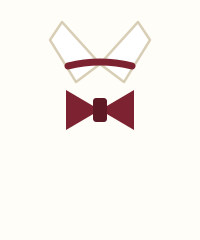
Adjust both sides until the bow is symmetric and snug, tugging the folded ends and the flat ends in turn.
Is it worth learning to tie a real bow tie?
Yes. A self-tied bow tie has a slightly imperfect, hand-tied look that a pre-tied one can't fake, and that small imperfection is exactly what reads as elegant and confident. For [black tie](/dress-codes/black-tie) especially, it's worth the ten minutes it takes to learn.
Why does my bow tie look uneven or messy?
Almost always because it was tightened too fast or pulled by the wrong ends. Seat the knot slowly, alternating gentle pulls between the folded loops and the flat ends, and adjust both sides in turn. A little asymmetry is fine. A self-tied bow is meant to look hand-made, not machine-perfect.
What occasions call for a bow tie?
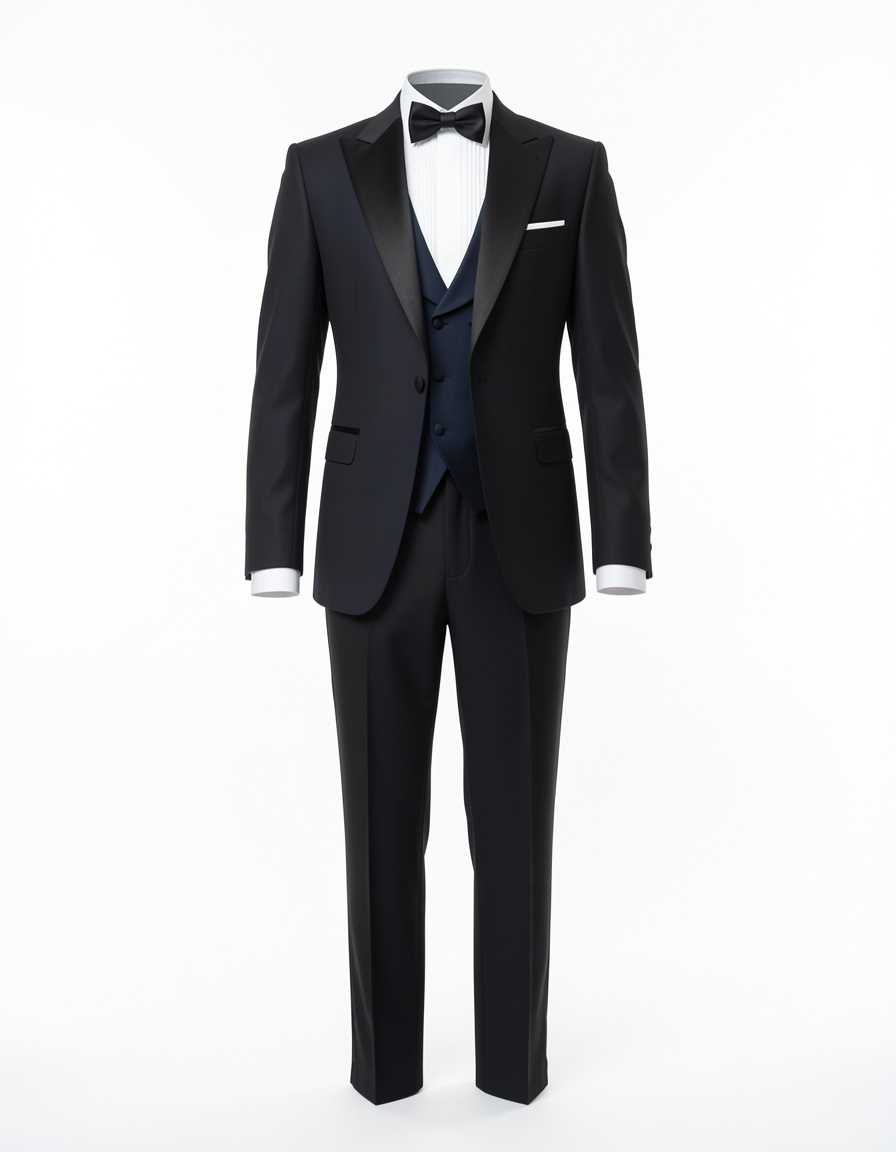
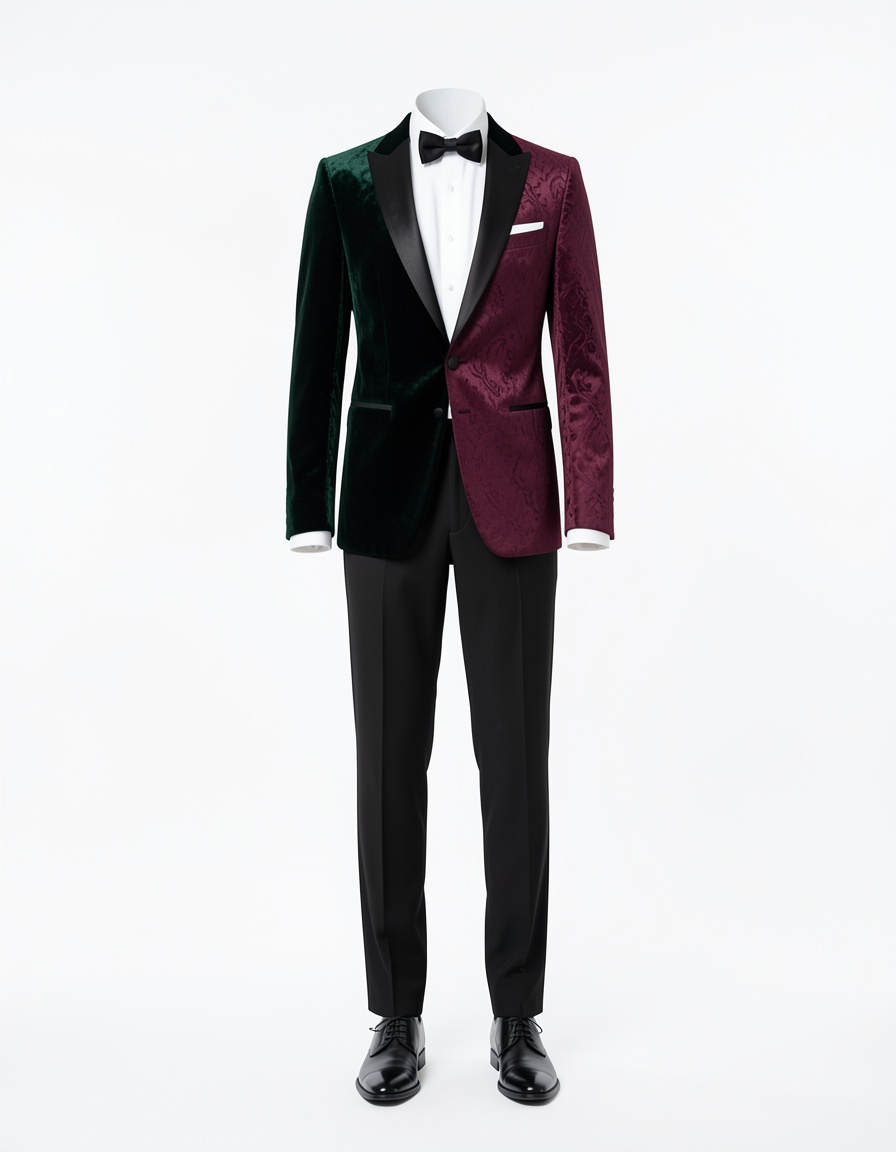
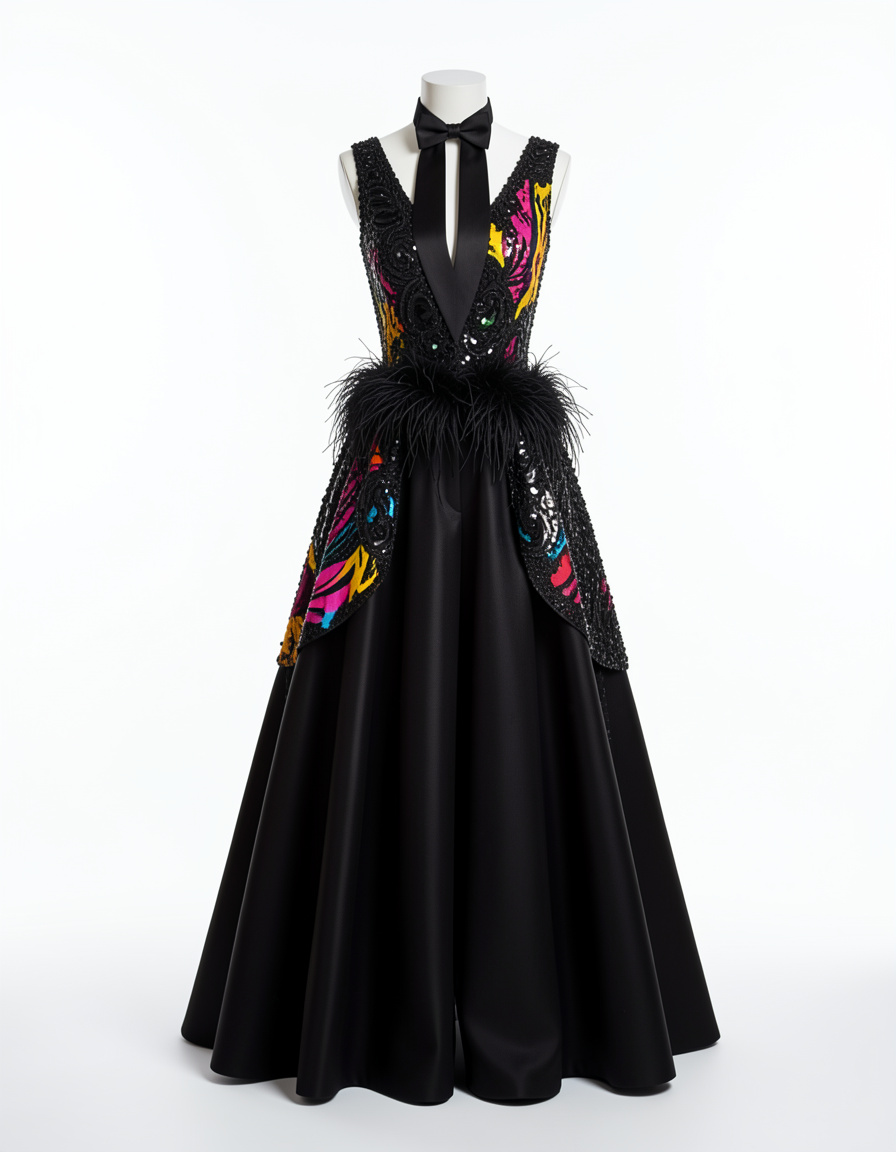
Black tie is the classic home of the bow tie, along with white tie and [creative black tie](/dress-codes/creative-black-tie). Beyond formalwear, a bow tie is a deliberate style choice for festive events and certain dressy occasions. For most business and everyday settings, a standard necktie is the expected option.
A stylist in your pocket.
Andy turns the clothes you already own into outfits that work — tuned to your taste, the weather, and the occasion.
Get Andy free