How to Tie a Four-in-Hand Knot
The four-in-hand is the easiest, most versatile tie knot. Slim, slightly asymmetric, and right for almost any collar. Here's how to tie it, step by step.
The four-in-hand is the knot to learn first and the one most people end up using for life. It’s quick, it forgives a wide range of ties and collars, and its slightly off-centre shape looks relaxed and modern rather than fussy. Once your hands know it, you can tie it without a mirror in well under a minute.
It uses less length than the Windsor knots, so if you’re tall, give the wide end a little extra drop at the start.
The rhythm is short and easy to memorise: over, under, over, up, and through. Work through the illustrated steps below slowly the first time, at your collar rather than in front of you.
Getting it right
- Start with enough length. The wide end should hang about 12 inches below the narrow end so you don’t run short before the final pass. Adjust until the tip lands at your belt buckle.
- Keep it loose until the end. Let the knot form with a little slack, then tighten by sliding it up to the collar so it sits centred and snug.
- Pinch the dimple. As you draw the knot up, press a small crease into the tie just below it. It’s the detail that makes the whole thing look deliberate.
- Embrace the asymmetry. The four-in-hand isn’t meant to be perfectly symmetric; the slight lean is part of its charm.
When you want something larger and more formal, the half-Windsor and full Windsor build on the same foundation. See the overview of tie knots for which to reach for when.
- 1
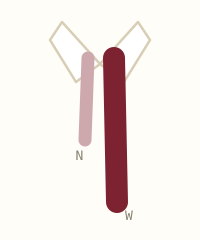
Set the starting length
Turn your collar up and drape the tie around your neck, seam facing in, with the wide end on your right hanging about 12 inches below the narrow end.
- 2
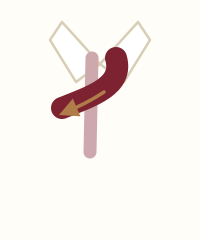
Cross wide over narrow
Cross the wide end over the narrow end to the left, holding the crossing point at your collar.
- 3
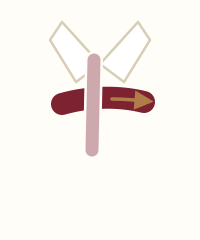
Bring it back underneath
Take the wide end underneath the narrow end and pull it across to the right.
- 4
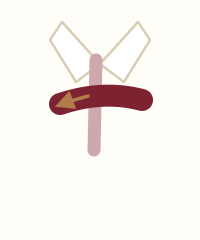
Cross over the front
Bring the wide end back across the front to the left, wrapping the narrow end once horizontally.
- 5
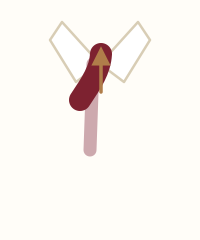
Up through the neck loop
Pull the wide end up through the loop around your neck from underneath.
- 6
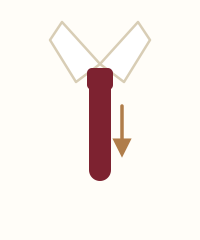
Down through the front
Bring the wide end down through the front loop you just created.
- 7
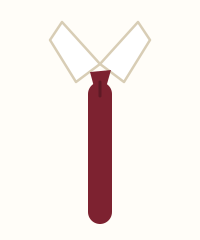
Tighten and dimple
Slide the knot up to the collar, holding the narrow end, and pinch a small dimple just below the knot as you tighten.
Why is it called a four-in-hand knot?
The name is usually traced to 19th-century coachmen who drove four-horse carriages (a 'four-in-hand') and, the story goes, tied their scarves this way. The knot stuck and it's now the most common way to tie a tie in the world.
Is a four-in-hand knot too casual for formal occasions?
Not at all. It's slightly asymmetric and slim, which reads as understated rather than informal. That makes it perfectly appropriate for interviews, work, and most weddings. For very wide spread collars or the most formal occasions, a fuller [Windsor](/how-to/tie-a-windsor-knot) fills the collar better, but the four-in-hand is never wrong.
What collar does the four-in-hand suit?
Narrow and standard point collars especially, where its slim shape sits in proportion. It works with most collars, in fact. Its modest width rarely looks out of place. It's only on a very wide spread collar that it can look a little lost, where a bigger knot does the job better.
A stylist in your pocket.
Andy turns the clothes you already own into outfits that work — tuned to your taste, the weather, and the occasion.
Get Andy free